Aquaponics vs Hydroponics: Real 2026 Cost, Yield & ROI Comparison
A head-to-head comparison from a factory that manufactures aquaponic systems for 50+ countries — including the trade-offs most articles gloss over.
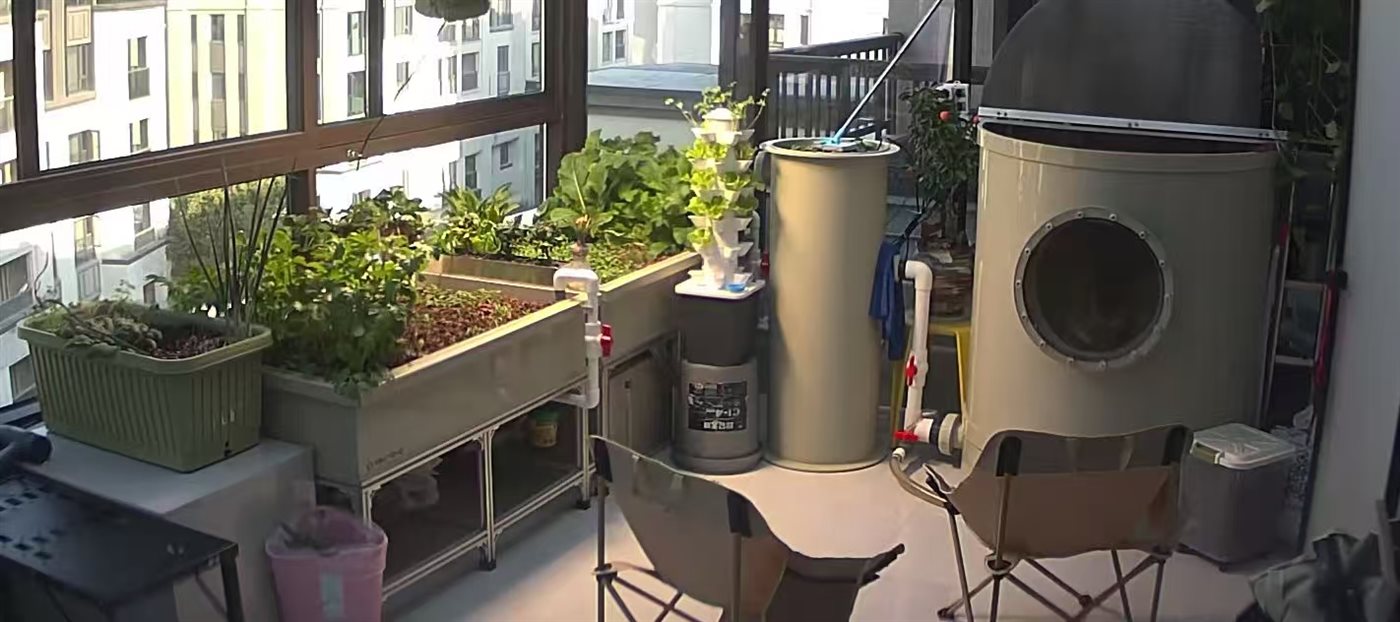
Most "aquaponics vs hydroponics" articles end with "it depends on your goals." That's not useful. This one gives you a real answer for each goal, with 2026 cost numbers from actual system builds and operating data from our factory's installed base across 50+ countries.
TL;DR: The Honest Verdict
| Your Goal | Better Choice | Why |
|---|---|---|
| Fastest payback | Hydroponics (short term) Aquaponics (18+ months) |
Hydroponics has lower startup. Aquaponics wins long-term via dual revenue. |
| Lowest total cost of ownership (5 years) | Aquaponics | No chemical nutrient purchases; fish are a renewable revenue stream. |
| Sustainability / organic market | Aquaponics | USDA Organic eligible; closed-loop ecosystem; premium pricing. |
| Simplest to operate (home scale) | Hydroponics | No fish biology, faster cycling, simpler troubleshooting. |
| Commercial scale, premium market | Aquaponics | Restaurants and CSAs pay more for aquaponic greens; story sells. |
| Commercial scale, volume commodity | Hydroponics | Tighter yield control and predictable economics for wholesale. |
How They Work: The Core Difference in One Sentence
Hydroponics feeds plants by dissolving mineral salts (mixed fertilizer) into water. The grower controls nutrients directly.
Aquaponics feeds plants via fish waste converted by bacteria. The grower manages an ecosystem that produces its own nutrients.
That single difference — synthetic nutrients vs. biological nutrients — drives every cost, yield, maintenance, and sustainability trade-off you'll read below.
Startup Cost Comparison (2026 Real Numbers)
Our data is based on complete turnkey systems at three common scales, using factory-direct equipment pricing. Hydroponic equivalents are priced from comparable commercial suppliers.
| Scale | Aquaponic System (Turnkey) | Hydroponic System (Equivalent Output) | Difference |
|---|---|---|---|
| Home 500L / 6 m² grow area | $800–$1,500 | $600–$1,200 | AP 15–25% higher |
| Side-hustle 1-ton / 6 m² grow beds | $3,000–$5,500 | $2,200–$4,200 | AP 25–30% higher |
| Commercial 4-ton / 24 m² grow beds | $15,000–$28,000 | $11,000–$20,000 | AP 30–40% higher |
Why aquaponics costs more up front: fish tank plus radial flow settler plus aeration are added components that hydroponic systems don't need. The gap narrows at scale because filtration overhead spreads across more production area.
If you want the line-by-line breakdown of aquaponic startup costs at each tier, see our Complete 2026 Aquaponics Cost Breakdown.
Operating Cost: Where Aquaponics Pulls Ahead
Startup cost is a one-time hit. Operating cost hits every month for the life of the system. At scale, the math flips in aquaponics' favor:
Annual Operating Cost — 1-ton Scale
| Cost Item | Aquaponics | Hydroponics |
|---|---|---|
| Nutrient inputs | Fish feed: $1,200–$2,400 | Mineral salts / nutrient mix: $1,800–$3,500 |
| Water / stocking | Fingerlings + top-up: $350–$700 | Water changes + pH adjusters: $200–$400 |
| Electricity (pumps, aeration) | $400–$800 | $300–$600 |
| Seeds / seedlings | $400–$800 | $400–$800 |
| Testing supplies & consumables | $300–$600 | $400–$900 (more chemical testing) |
| Total / year | $2,650–$5,300 | $3,100–$6,200 |
Aquaponics runs 10–18% cheaper per year to operate at this scale. The advantage grows at larger scale because mineral nutrient purchases scale linearly in hydroponics, while fish feed scales more slowly (fish convert feed into usable nutrient at FCR ≈ 1.5:1, then the plants grow on that output indefinitely).
Yield: Plants, Fish, and the "Dual Output" Advantage
This is where comparisons get tricky. Hydroponics produces plants only. Aquaponics produces plants and fish. Single-output vs. dual-output changes the revenue math.
Plant Yield (Apples to Apples)
For leafy greens — the most common commercial crop in both systems — yields are within 5% of each other under well-managed conditions. Hydroponics has a slight edge in peak fruiting phase for heavy-feeding plants (tomatoes, peppers) because nutrient concentrations can be dialed up. Aquaponics ties or wins for continuous-harvest greens and herbs because the ecosystem delivers moderate, stable nutrition over months rather than spike-and-crash cycles.
The Fish Line: Aquaponics' Second Revenue Stream
- 1-ton system: 80–150 kg of tilapia/year, worth $400–$1,200 at wholesale or $800–$2,400 direct-to-restaurant
- 4-ton system: 300–500 kg of tilapia/year, worth $1,500–$4,500 wholesale or $3,000–$9,000 direct
Even at modest fish pricing, the fish line adds 10–25% to annual revenue — a meaningful cushion against greens market volatility. Hydroponic operations have no comparable secondary output.
Yield verdict
Plant-yield tie (slight edge to hydroponics in heavy-feeding crops). Total-revenue advantage goes to aquaponics thanks to the fish line.
Maintenance & Learning Curve
This is where hydroponics earns its reputation as "easier."
Hydroponics: Fewer Variables, Faster Feedback
- Nutrient concentration measured with EC meter — any imbalance shows up in 1–2 days
- pH adjustment is direct: add up or down solution
- No biological cycling period: 1–2 weeks and you're planting
- System can be drained, cleaned, and restarted in a day if something goes wrong
Aquaponics: Living System, Slower to Dial In
- Requires 4–6 weeks of nitrogen cycling before full production stocking
- Managing three biological layers simultaneously: fish health, bacterial colony, plant nutrition
- Water parameter test panel is more complex: ammonia, nitrite, nitrate, pH, dissolved oxygen
- Cannot be "reset" quickly — if fish crash, you lose 6–8 weeks rebuilding the colony
Sustainability & Market Positioning
Water Use
Both systems use about 90% less water than soil agriculture. Between the two, hydroponics uses slightly less per unit of produce, but aquaponics is closer to truly closed-loop: you almost never change the water, you only top up evaporation. Over the system's lifetime, aquaponics' total water consumption is competitive because you avoid the periodic nutrient-dump water changes hydroponic systems require.
Nutrient Footprint
Hydroponic mineral salts are mined — most commonly potash from Saskatchewan/Russia and phosphate from Morocco. Aquaponic "nutrient" is fish feed, typically from soy and fishmeal sources. Neither is zero-impact, but aquaponics' nutrient footprint is more distributed and biologically renewable.
Certification & Market Premium
This is where aquaponics has a real commercial edge: USDA Organic certification is straightforward for aquaponic operations and remains contested or blocked for hydroponics in multiple jurisdictions. If your market cares about organic — restaurants, farmers markets, CSAs, specialty grocers — aquaponic produce commands a 20–40% premium over equivalent hydroponic greens.
Commodity wholesale markets don't pay this premium, which is why large hydroponic operations still dominate bagged-salad retail.
Scalability: Commercial Decision Framework
At commercial scale (4-ton and up), the choice depends less on the systems themselves and more on your business model:
| Business Model | Recommended System | Why |
|---|---|---|
| Wholesale to supermarkets / distributors | Hydroponics | Price-sensitive; consistency matters more than story. Predictable yield economics. |
| Farm-to-restaurant, CSA, farmers markets | Aquaponics | Premium pricing, organic certification, the "story" sells. Fish adds revenue line. |
| Specialty greens (basil, microgreens) | Either (slight aquaponic edge) | Small-margin game; aquaponic "organic" halo helps premium positioning. |
| School / educational program | Aquaponics | The fish-plant cycle is visually teachable. Hydroponics is "just plants in water." |
| Urban vertical / warehouse farms | Hydroponics | Higher density per m², simpler mechanical footprint, faster iteration. |
| Rural greenhouse / agricultural land | Aquaponics | Lower operating cost at scale; fish revenue offsets winter greens slowdown. |
ROI Comparison: The 5-Year Picture
We modeled a 1-ton system under identical commercial conditions (direct-to-restaurant sales, owner-operator labor, temperate climate with greenhouse):
| Metric | Aquaponics 1-Ton | Hydroponics Equivalent |
|---|---|---|
| Initial investment | $4,500 (midpoint) | $3,200 (midpoint) |
| Year 1 revenue (greens) | $35,000 | $38,000 |
| Year 1 revenue (fish) | $4,000 | $0 |
| Year 1 operating cost | $4,000 | $4,650 |
| Year 1 net profit | $35,000 | $33,350 |
| Payback period | ~7 months | ~5 months |
| 5-year cumulative profit | $170,000+ | $163,000 |
Hydroponics wins the first 12 months. Aquaponics catches up around month 18 and surpasses hydroponics from year 2 onward. Over 5 years, aquaponics delivers 4–7% more cumulative profit at the 1-ton scale, and the gap widens at 4-ton scale because aquaponic operating cost efficiency compounds.
For the full aquaponic ROI breakdown at each scale, see our Aquaponic System ROI: 2026 Payback Analysis.
Want a Custom ROI Projection?
Tell us your location, target crops, and sales channel. We'll build you a head-to-head ROI model for aquaponics vs hydroponics based on your actual inputs — no obligation.
Get a Personalized Analysis →5 Common Myths (Debunked)
Myth 1: "Aquaponics is always cheaper to run"
False. Aquaponics has lower operating cost only at 1-ton scale and above, once the system is fully cycled. Home-scale aquaponics (500L) often has comparable or slightly higher per-kg cost than hydroponics because fixed costs like electricity don't scale down well.
Myth 2: "Hydroponics is faster-growing"
Marginally true for heavy-feeding plants in peak phase (tomatoes, strawberries), but false for leafy greens, where both systems produce harvestable heads in the same 4–6 week timeframe. The difference is usually under 7 days.
Myth 3: "Aquaponics is organic by default"
Partially false. Aquaponics is eligible for USDA Organic certification but still requires the paperwork, non-GMO fish feed sourcing, and inspection. The ecosystem approach makes compliance easier, not automatic.
Myth 4: "Hydroponics is simpler"
True for the first 6 months. False after that. Once an aquaponic ecosystem stabilizes, it requires less daily intervention than hydroponic nutrient mixing and EC/pH chasing. Hydroponics has a shallower initial learning curve but a higher ongoing attention requirement.
Myth 5: "You have to pick one"
False. Commercial operations increasingly run hybrid systems — aquaponic core for greens and fish revenue, plus a dedicated hydroponic channel for heavy-feeding fruiting crops. This is how you maximize yield across all crop types in the same facility.
Final Decision Framework
Choose hydroponics if:
- You want to start producing in under 2 weeks
- You're targeting wholesale or commodity bagged-salad markets
- You're risk-averse and want predictable yield economics
- Your primary crop is heavy-feeding fruiting vegetables (tomatoes, peppers, strawberries)
- You want to operate in a tight urban / warehouse footprint
Choose aquaponics if:
- Organic certification matters for your market
- You're selling direct-to-restaurant, CSA, or farmers market
- You want the fish line as a secondary revenue stream
- You're building a multi-year operation where lower operating cost compounds
- Sustainability story is part of your brand
- You're running an educational or school program
Choose both (hybrid) if:
- You're running a 4-ton+ commercial operation with multiple crop types
- You want to sell into both wholesale and premium channels
- Your facility has room for separate systems and your operator can manage both
Frequently Asked Questions
Is aquaponics cheaper than hydroponics to run?
At 1-ton scale and above, yes — by roughly 10 to 18% in annual operating cost. Below that scale, the two are comparable. Aquaponics saves on nutrient cost (fish feed replaces mineral salts) but adds fish stocking and slightly higher electricity.
Which has a faster ROI?
Hydroponics has faster initial ROI (lower startup cost, faster commissioning). Aquaponics catches up around month 18 and wins over 5-year horizons thanks to dual revenue and lower operating cost compounding.
Can aquaponics grow the same plants as hydroponics?
Most leafy greens, herbs, and fruiting vegetables grow equally well in both. Hydroponics has a slight edge for heavy-feeding fruiting crops in peak phase. Aquaponics performs better for continuous-harvest greens where stable moderate nutrition beats spike-and-crash schedules.
Which is better for beginners?
Hydroponics is easier to start (no fish biology, shorter cycling). But aquaponics is more forgiving once established — the biological buffer tolerates grower mistakes better than a hydroponic nutrient mix.
Does aquaponics use more water than hydroponics?
Both use about 90% less than soil agriculture. Aquaponics uses marginally more due to evaporation but almost never requires full water changes. Over the system lifetime, total water use is comparable.
Is aquaponics more organic?
Yes. Nutrients come from a living biological source (fish waste) rather than mined mineral salts. USDA Organic certification is possible for aquaponics and remains contested for hydroponics in several jurisdictions. For organic-focused markets, aquaponics has a clear advantage.
iAquaponic Complete Systems — Factory Direct
From 500L home systems to 4-ton commercial farms. Every component pre-matched, food-grade, lifetime technical support. Shipped worldwide.
View All Systems →Related Reading
- Aquaponic System ROI: Real 2026 Payback Analysis (500L to 4-Ton)
- Commercial Aquaponics System Cost: Complete 2026 Breakdown
- Best Fish for Aquaponics: Tilapia vs Barramundi vs Trout Compared
- How to Set Up an Aquaponic System: Step-by-Step Beginners Guide
- Complete Beginner's Guide to Aquaponics: How It Works