Aquaponic System ROI: Real 2026 Payback Analysis (500L to 4-Ton)
Honest numbers for home, backyard, and commercial systems — no hype, no marketing math.
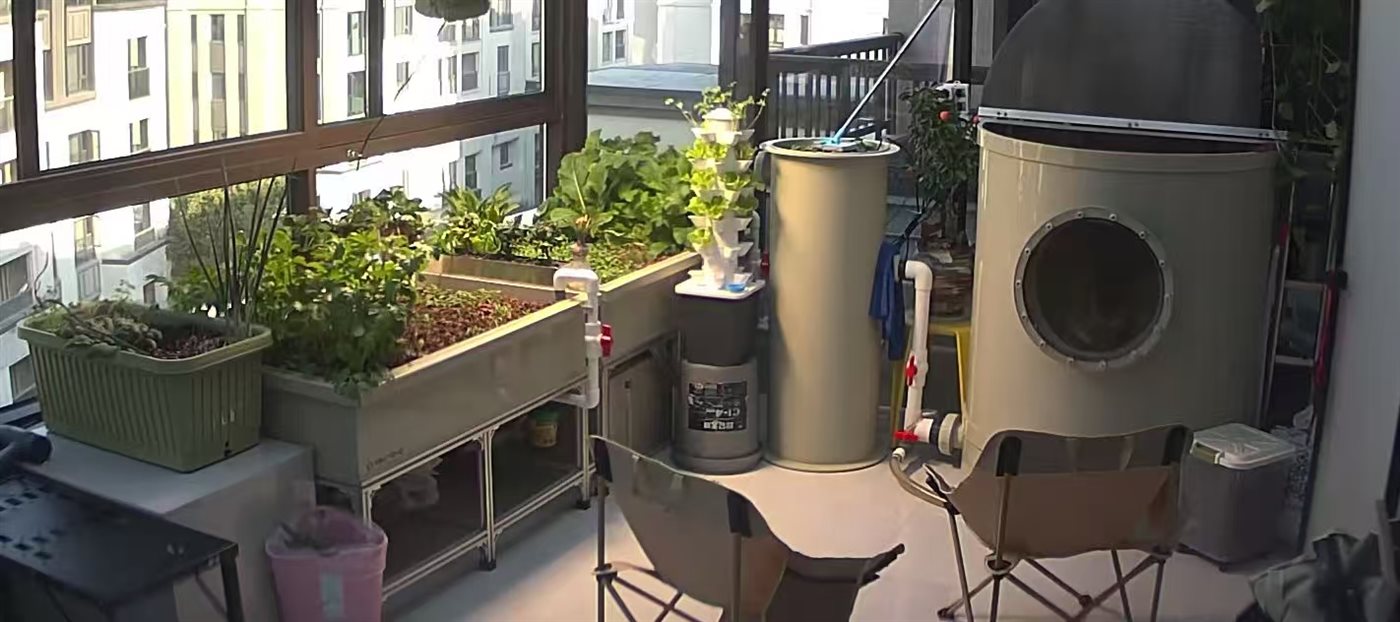
Most aquaponic ROI articles quote nursery-price systems or ignore operating costs. This one uses factory-direct pricing on our actual product line — Compact 500L, Standard 1-Ton, and Commercial 4-Ton — and walks through payback in real 2026 input costs, not best-case marketing figures.
TL;DR: 3 Systems, 3 ROI Realities
| System | Initial Investment | Net Annual Value | Payback Period | Fits Who |
|---|---|---|---|---|
| Compact 500L | $800–$1,500 | $1,000–$1,800 (grocery offset) | 12–24 months | Homeowners, hobbyists, educators |
| Standard 1-Ton | $3,000–$5,500 | $6,000–$15,000 net profit | 8–18 months | Side-hustle growers, restaurants, schools |
| Commercial 4-Ton | $15,000–$28,000 | $30,000–$60,000 net profit | 6–12 months | Full-time farmers, CSA operators, agri-businesses |
The 4-ton system has the fastest payback in absolute terms because greens and fish both scale linearly with grow-bed area while the fixed-cost fraction (filtration, plumbing, settler) actually shrinks per kilogram of output. Payback is not the only metric — we'll break down each system's ROI logic below.
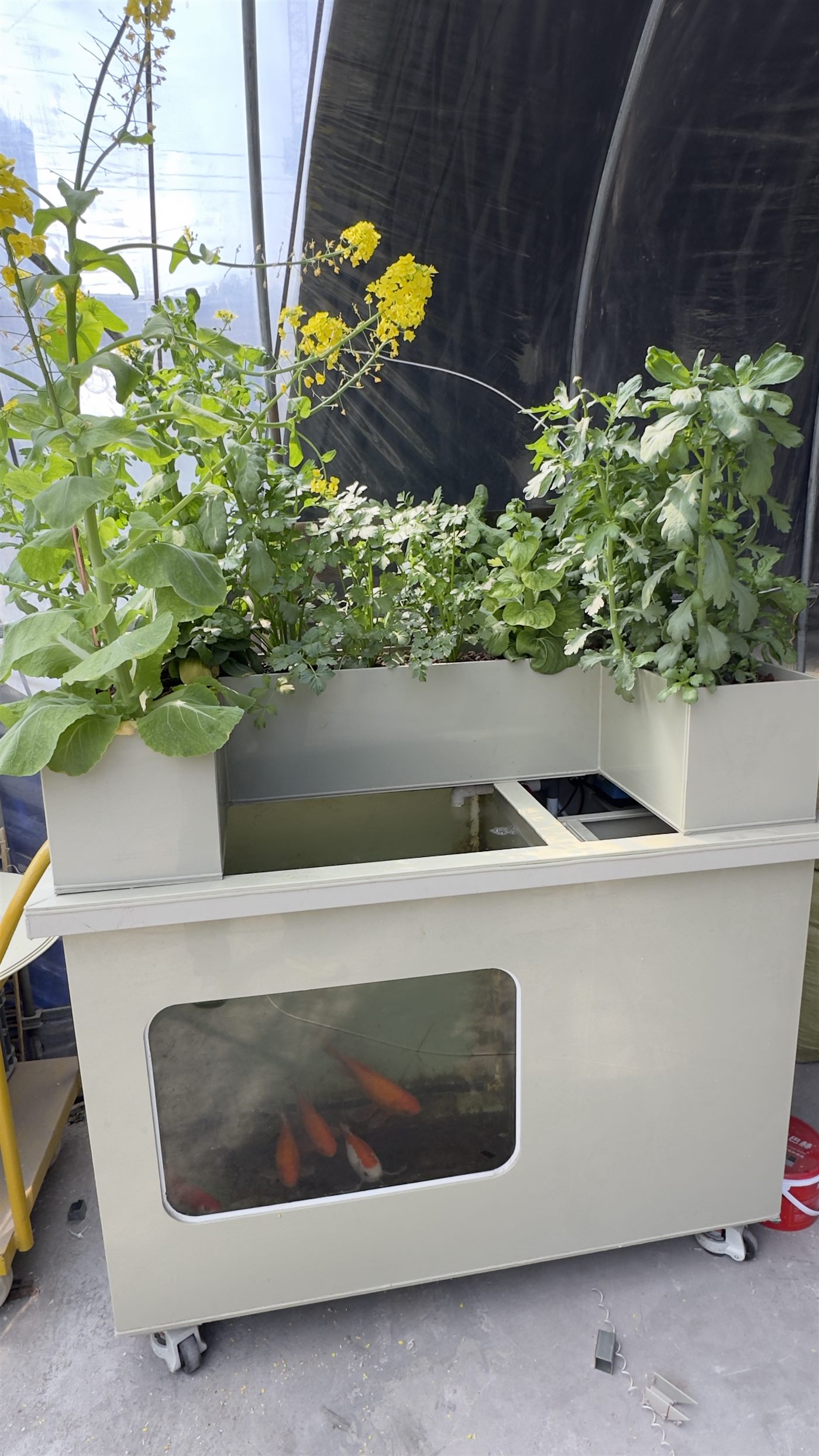
Compact 500L: ROI Is Replacement, Not Profit
The 500-liter system is not designed to generate cash. Measuring its ROI in net profit is the wrong frame — this system pays back by replacing what you already spend at the grocery store, with the secondary benefit of pesticide-free, zero-mile food.
What It Produces Per Year
- Leafy greens: roughly 8–12 heads of lettuce equivalent per week from a single 0.8m × 2m grow bed, or about 400–600 heads per year
- Herbs: continuous basil, mint, cilantro, parsley — replaces $15–$25/month of grocery herbs
- Fish: 30–50 kg of tilapia or perch per year, enough for 2–3 family meals per month
Cost Breakdown
| Item | Annual Cost |
|---|---|
| Fish feed (20–30 kg) | $60–$100 |
| Electricity (pump + aeration, ~25W continuous) | $35–$60 |
| Fingerlings or restocking | $40–$80 |
| Seeds/seedlings | $30–$60 |
| Water (evaporation top-up only) | $10–$20 |
| Total operating cost | $175–$320/year |
ROI Math
Retail value of 400–600 heads of organic-quality lettuce at $2–$4/head: $800–$2,400. Add herbs and fish at retail: $1,200–$3,000 total replaceable grocery spend. Subtract the $200–$300 operating cost, and the system replaces about $1,000–$2,700/year of grocery spend. At an $800–$1,500 initial investment, that's a 12–24 month payback.
This math only works if you actually eat the lettuce and fish. The most common reason 500L systems underperform is overproduction the owner can't consume. Size your setup to match household consumption.
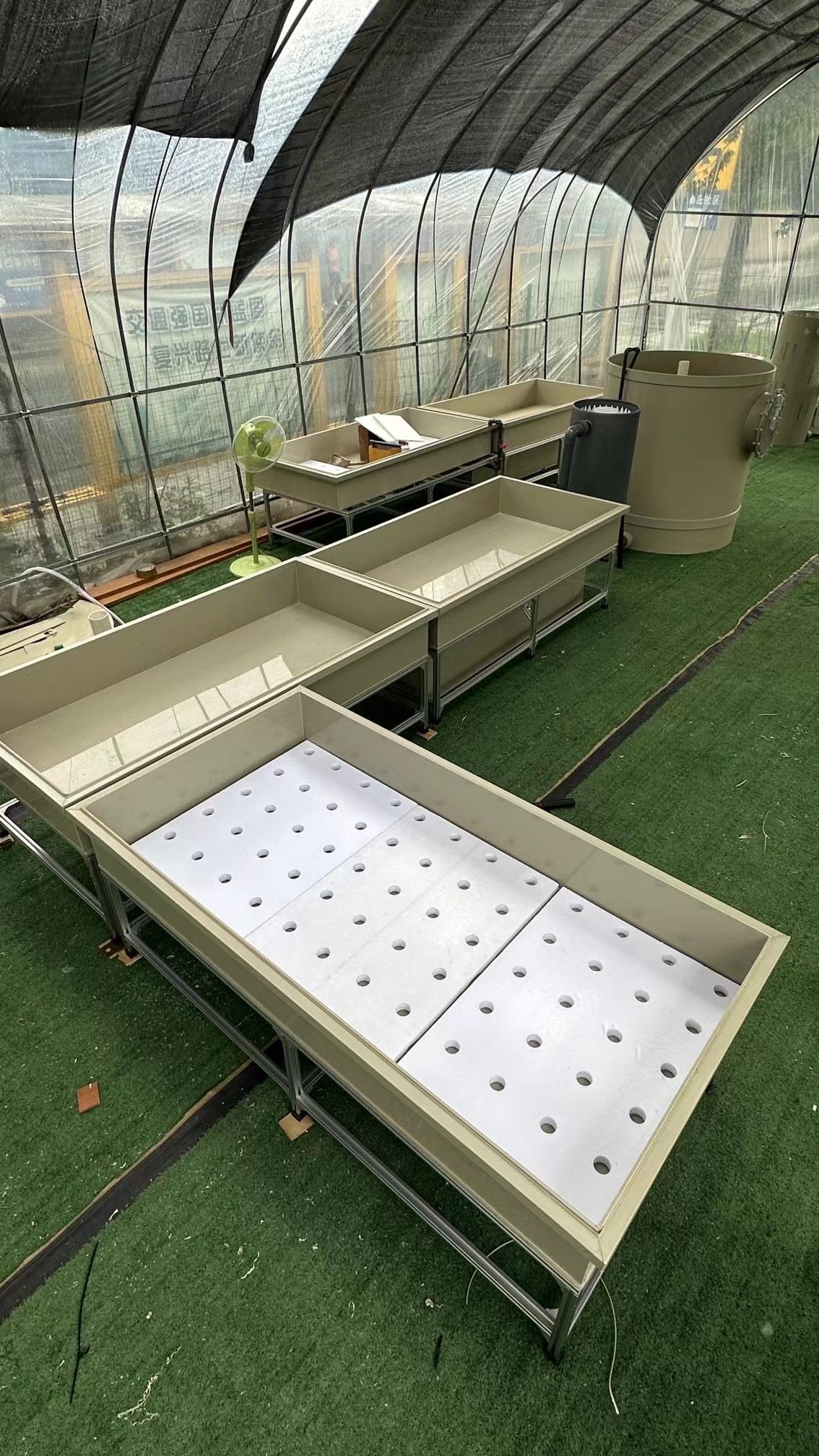
Standard 1-Ton: Where Aquaponics Starts Paying Cash
The 1,000-liter system is the first scale at which aquaponics becomes a profitable side business — and it's our best seller for exactly this reason. Three 1m × 2m grow beds (6 m² total) produce enough consistent volume to supply a local restaurant, a CSA route, or a weekly farmers market stall.
What It Produces Per Year
- Leafy greens: 400–600 heads per week equivalent, or 20,000–30,000 heads per year at 50 weeks of production
- Premium herbs: continuous harvest of basil, mint, chives, cilantro — often the single highest-margin line
- Fish: 80–150 kg of tilapia, barramundi, or perch per year depending on species and stocking density
Revenue Scenarios
| Sales Channel | Greens Price | Annual Gross Revenue |
|---|---|---|
| Wholesale to distributor | $1.20/head | $24,000–$36,000 |
| Farmers market direct | $3.00/head | $60,000–$90,000 (lower volume) |
| Direct-to-restaurant | $2.00/head + fish | $40,000–$60,000 |
| CSA subscription | Mixed basket | $30,000–$50,000 |
Cost Breakdown
- Fish feed: $1,200–$2,400/year
- Electricity (pumps + aeration, ~50–70W continuous): $400–$800/year
- Fingerlings/restocking: $300–$600/year
- Seeds and seedlings: $400–$800/year
- Testing supplies, minor parts, packaging: $300–$600/year
- Delivery fuel or market fees (if applicable): $400–$1,200/year
- Total operating cost: $3,000–$6,400/year
Net Profit & Payback
A realistic owner-operator 1-ton system selling direct-to-restaurant or at farmers markets clears $6,000–$15,000 in net profit annually, not counting owner labor. At $3,000–$5,500 factory-direct pricing, that's an 8–18 month payback. The range is wide because your sales channel matters more than any other variable — see the "ROI factors" section below.
This is also the scale most commonly bought by school programs and restaurant back-patios: even without maximizing revenue, the system pays for itself in 18–24 months purely on produce-cost offset and educational value.
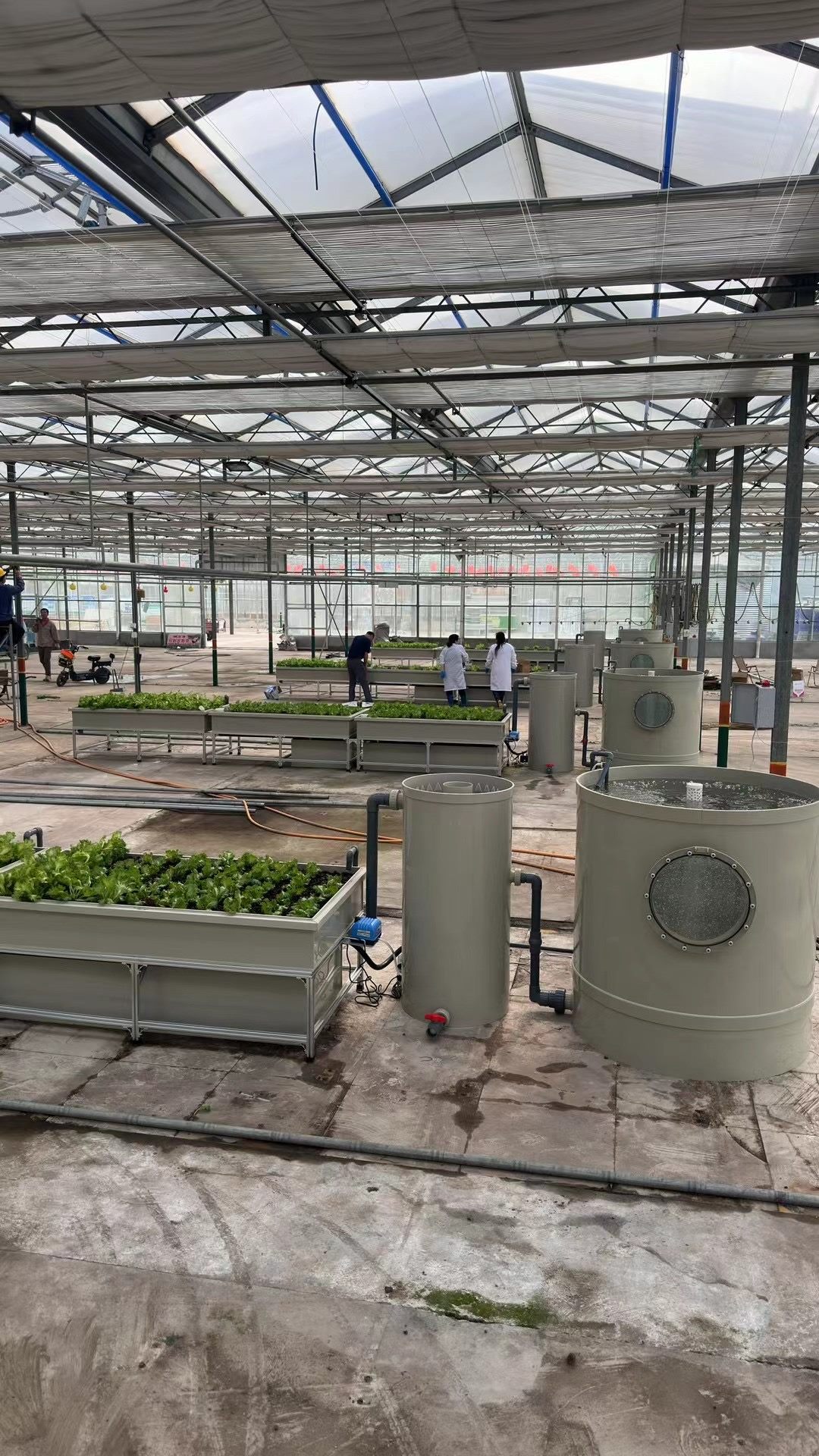
Commercial 4-Ton: The Profit Inflection Point
At 4,000 liters with 12 grow beds (24 m² total), fixed costs spread across four times the output — which is why payback accelerates rather than slows. This is the scale where aquaponics transitions from "nice side income" to "replaceable full-time job."
What It Produces Per Year
- Leafy greens: 1,500–2,500 heads/week, or 75,000–125,000 heads per year at continuous production
- Fish: 300–500 kg of tilapia annually, with staggered harvests every 6–8 weeks
- Premium herbs & specialty crops: basil, microgreens, strawberries in vertical towers — often 30–50% of total revenue despite less area
Revenue Scenarios
| Business Model | Annual Gross Revenue | Realistic Net Margin |
|---|---|---|
| Wholesale only | $60,000–$90,000 | 25–35% |
| Mixed wholesale + restaurant direct | $90,000–$130,000 | 35–45% |
| CSA + farmers markets + restaurant | $100,000–$160,000 | 40–50% |
| Specialty crops focus (basil, microgreens) | $120,000–$200,000 | 45–55% |
Cost Breakdown
- Fish feed: $4,000–$8,000/year
- Electricity (4 pumps + 4 aeration units, ~200–300W continuous): $1,800–$3,500/year
- Fingerlings/restocking: $1,200–$2,400/year
- Seeds and seedlings: $2,000–$4,000/year
- Part-time labor (10–20 hrs/week): $8,000–$20,000/year
- Packaging, delivery, market/CSA logistics: $3,000–$6,000/year
- Total operating cost: $20,000–$43,900/year
Net Profit & Payback
At mixed sales channels with owner-operator management and 10–15 hours/week of hired help, a 4-ton system realistically clears $30,000–$60,000 net profit per year. At $15,000–$28,000 factory-direct pricing plus approximately $5,000–$10,000 in greenhouse, plumbing connections, and startup fish stock, total capex is $20,000–$38,000. Payback: 6–12 months for a well-run operation.
Ready to Run Your Own Numbers?
Tell us your location and sales channel, and we'll build you a system-matched ROI projection. Factory-direct pricing, lifetime technical support, shipped worldwide.
Get a Personalized Quote →The 5 Factors That Actually Move Aquaponic ROI
Most of the variance between a system that pays back in 8 months and one that takes 24 months comes down to these five levers:
1. Sales Channel (biggest lever)
Direct-to-restaurant pricing is typically 2–3× wholesale. Farmers market direct sits between the two. A 1-ton system selling wholesale clears $6k/year; the same system selling to three local restaurants clears $14k. Channel selection is the single largest ROI lever — larger than system size within reason.
2. Electricity Cost
Pumps and aeration run 24/7. At $0.10/kWh, a 1-ton system costs $400/year in electricity; at $0.30/kWh (high-cost urban areas), it climbs to $1,200/year. If you're on high tariffs, solar panels pay back in 3–5 years specifically for aquaponic operations.
3. Year-Round Production (greenhouse impact)
Outdoor seasonal operation in temperate climates yields 30–35 weeks of production; a basic hoophouse extends this to 48–50 weeks, lifting annual revenue by 40–80%. A greenhouse isn't required — but skipping it leaves significant ROI on the table in any climate with a real winter.
4. Fish Species & Feed Conversion
Tilapia is the default for good reason: 1.5–2.0 feed conversion ratio, tolerant of wide temperature and water-quality ranges, and 6–8 month harvest cycles. Trout or barramundi command higher retail prices but require tighter water management and often cooler temps, which can add heating or chilling costs. Start with tilapia; graduate to premium species only once the system operates reliably.
5. Labor Model
Owner-operator labor is "free" only if you value your time at zero. At 1-ton scale, 5–10 hrs/week is typical; at 4-ton, 15–25 hrs/week. If you need to hire all labor at commercial scale, net margin drops from ~45% to ~25–30%. Most profitable operators start owner-operator and add part-time help only as they scale past 4-ton.
Common ROI Pitfalls (and How to Avoid Them)
- Oversizing before securing buyers. Buy the system your current demand justifies. A fully-sold 1-ton system out-earns a half-sold 4-ton system.
- Ignoring cycling time. New systems need 4–6 weeks of nitrogen cycling before full stocking. Budget zero revenue for months 1–2.
- Underpricing greens to "move product." Aquaponic greens are premium; price them like premium. Competing on price with hydroponic operations at wholesale is a race to the bottom.
- Skipping the radial flow settler. Cheaper DIY builds often omit this component. Poor solids management crashes fish health, which crashes plant nutrients, which tanks revenue for an entire quarter.
- Counting every dollar of produce as "profit." At home scale, only count produce you'd actually buy at the grocery store. Zucchinis rotting on the counter aren't ROI.
Which System Fits Your Goals?
Choose the Compact 500L if you want educational value, year-round fresh greens for your household, and a gentle introduction to aquaponic management. ROI is measured in grocery offset and food quality, not cash.
Choose the Standard 1-Ton if you want aquaponics to become a real side income. Secure one restaurant buyer or a farmers market slot before ordering, and you'll pay back in under a year.
Choose the Commercial 4-Ton if you're building a full-time operation or replacing a job. Line up a mixed sales channel (2–3 restaurants + 1 CSA or market), and this is the fastest path to $30k+ annual profit from a single-person operation.
Frequently Asked Questions
Is an aquaponic system actually profitable?
At 1-ton scale and above, yes — a well-run 1-ton system typically clears $6,000 to $15,000 per year selling locally, and a 4-ton commercial system can reach $30,000 to $60,000 annually. Home 500L systems are not designed to generate cash profit; they pay back through replacing grocery costs within 12 to 24 months.
What is the payback period for a commercial aquaponic system?
A Standard 1-Ton factory-direct system pays back in roughly 8 to 18 months when selling greens and tilapia locally. A Commercial 4-Ton system pays back in 6 to 12 months at mixed sales channels, faster when selling direct to restaurants or CSA members.
What are the main factors that affect aquaponic ROI?
The five factors that move aquaponic ROI most are sales channel, electricity cost, fish species and feed conversion ratio, labor model, and whether you're operating year-round. Sales channel is by far the largest lever — restaurant-direct typically doubles net margin versus wholesale.
Do I need a greenhouse to get a good ROI?
A greenhouse is not required for positive ROI but significantly improves it. Year-round production lifts annual revenue by 40 to 80 percent versus seasonal outdoor operation. If you can't build one initially, start sheltered outdoors and reinvest year-one profit into covering.
How much does it cost to run a 1-ton aquaponic system per year?
Annual operating costs for a 1,000-liter system typically fall between $3,000 and $6,400 — fish feed ($1,200–$2,400), electricity ($400–$800), fingerlings ($300–$600), seeds ($400–$800), and consumables, packaging, and market fees. Owner-operator labor is not included at this scale.
iAquaponic Complete Systems — Factory Direct
Every component pre-matched and food-grade. No middlemen, no markups — factory pricing with lifetime technical support. Shipped worldwide with full assembly instructions.
View All Systems →